
Menu
What is Pool Chemistry?
Pool chemistry is the balance of key water parameters that keep your pool clean, clear, comfortable, and safe. When your chemistry is balanced, your water stays sparkling, your equipment lasts longer, and you avoid common issues like algae, cloudy water, and skin or eye irritation.
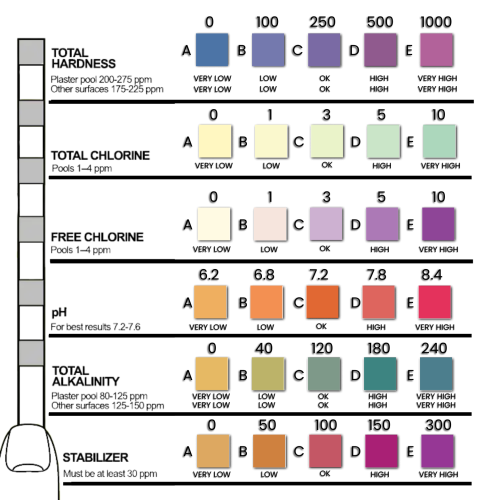
Calcium Hardness
What it is
The amount of dissolved calcium in your water.
Why it matters
Too low and your water becomes “hungry,” trying to pull calcium from your plaster, tile, or grout. Too high and you get scale buildup on your surfaces and equipment.
Total Chlorine
What it is
The sum of both active and “used up” chlorine in your pool.
Why it matters
Total chlorine helps you see if your free chlorine is being consumed too quickly or if you may have buildup of combined chlorine (what causes strong chlorine smell).
Free Chlorine
What it is
The active, working chlorine that actually sanitizes your water.
Why it matters
This is the number that tells you if your pool is properly disinfected. Free chlorine kills bacteria and keeps water safe and clear.
pH
What it is
A measure of how acidic or basic your pool water is.
Why it matters
Proper pH protects your skin, eyes, equipment, and even your chlorine. If pH is too high or too low, chlorine won’t work as effectively.
Total Alkalinity
What it is
A measure of how “stable” your pH is.
Why it matters
Think of alkalinity as the foundation that holds your pH steady. If alkalinity is off, your pH will swing wildly, making balance difficult and irritating to swimmers.
Stabilizer (CYA / Cyanuric Acid)
What it is
Sunscreen for your chlorine.
Why it matters
Without stabilizer, sunlight burns off chlorine quickly. With too much stabilizer, chlorine becomes less effective. It’s all about finding the right range.
Salt (If applicable)
What it is
The dissolved salt level in saltwater pools.
Why it matters
Saltwater systems use salt to create chlorine. If the salt level is too low, the generator can’t produce chlorine. If it’s too high, it can cause scaling or system errors.